
CUSTOM HOME BUILDING
Does Building a Custom Home Have to Be Expensive?
What it really costs to build a custom home in Volusia County — and how smart planning can keep the project more affordable than many homeowners expect.
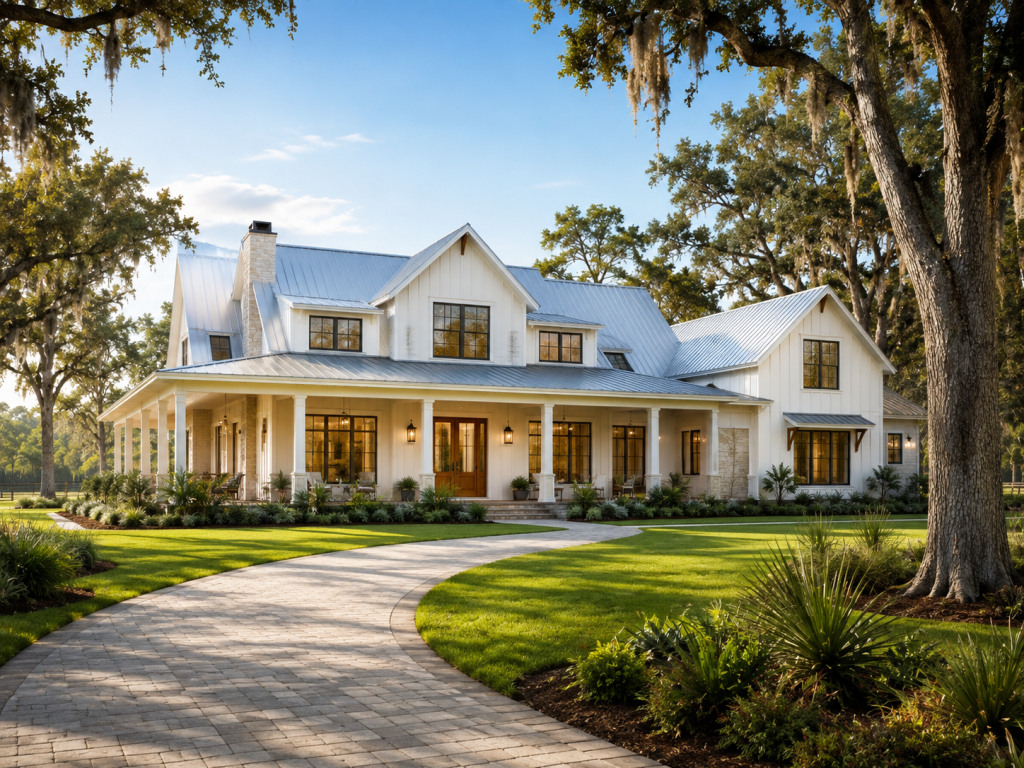
Conceptual coastal-home rendering shown for inspiration. Final plans, engineering, elevations, materials and specifications are determined by the property and project requirements.
What Really Affects the Cost of a Custom Home?
Building a custom home does not automatically mean building an expensive luxury home. The final cost is driven much more by the size of the house, complexity of the design, property conditions and the finishes you choose.
A well-planned home with an efficient floor plan, straightforward rooflines and realistic selections can often be built much more economically than people expect. The goal is to make design decisions around your priorities and budget from the beginning.
Home Size & Layout
Efficient square footage and a practical floor plan can have a major impact on the overall construction budget.
Design & Structure
Rooflines, ceiling heights, large openings and structural complexity can increase labor and material costs.
Finishes & Selections
Cabinets, countertops, flooring, fixtures, windows and other selections allow you to decide where to spend — and where to save.
Buying the Right Land Can Save You Money Later
Before finalizing a home plan or construction budget, the property itself needs to be evaluated. Lots throughout Volusia County can have very different requirements based on zoning, setbacks, drainage, soil conditions, trees, utilities, flood information and site access.
A lower-priced piece of land is not always the least expensive property to build on. Clearing, fill, drainage improvements, well and septic systems, longer utility runs or difficult site access can add costs that may not be obvious when you first look at the lot. Reviewing these conditions early can help you understand the true cost of building a custom home on the property.
You also do not need to own land before contacting Colubiale Builders. If you are considering property in DeLand, New Smyrna Beach, Port Orange, Ponce Inlet, Ormond Beach, Edgewater, DeBary or elsewhere in Volusia County, we can help you look at the lot from a construction perspective before too much money is invested in plans and design.
- Zoning and building setbacks
- Lot dimensions and buildable area
- Boundary and topographic survey information
- Flood zone and elevation considerations
- Soil conditions and groundwater
- Drainage and stormwater requirements
- Trees, clearing and site preparation
- Water and sewer availability
- Well and septic requirements where applicable
- Electrical and utility access
- Driveway and construction access
- Fill, grading and other site-work requirements
Evaluating the land early helps identify potential site costs before the home is fully designed and allows the floor plan, construction approach and budget to develop together.
Do You Need an Expensive Custom Plan to Build a Custom Home?
Not every custom home needs to begin with an expensive architectural design created completely from scratch. The planning approach should depend on the property, the type of home you want to build, your priorities and the overall construction budget.
Many homeowners begin with an existing house plan, an online floor plan, inspiration photos or a general idea of the layout they want. Those ideas can then be developed or modified by the appropriate draftsman, designer and engineers to fit the property and meet Florida building requirements.
Getting Colubiale Builders involved before the plans are finalized can also help keep the design aligned with the construction budget. Sometimes relatively simple decisions involving square footage, rooflines, ceiling heights, structural spans or the location of kitchens and bathrooms can have a significant effect on the cost of building the home.
Custom Does Not Mean Expensive
Building a custom home does not mean every part of the house needs to be oversized, complicated or filled with high-end finishes. A well-designed custom home can use efficient square footage, straightforward construction and carefully chosen materials while still feeling completely personal to the homeowner.
The biggest advantage of building custom is having control over where your money goes. You can prioritize the spaces and features that matter most to you while keeping other areas simple and practical.
- Overall square footage of the home
- Number of stories
- Complexity of the roofline
- Ceiling heights and large structural spans
- Number and size of windows and exterior doors
- Kitchen and bathroom layouts
- Cabinet, countertop and flooring selections
- Covered porches, lanais and outdoor living areas
- Site conditions and foundation requirements
How the Home Plan Affects the Cost of Building
Two custom homes with the same square footage can have very different construction costs. The layout and architectural design of the home can affect the amount of concrete, framing, roofing, labor and structural work required to build it.
Simple design decisions can make a major difference. A straightforward footprint, efficient room layout and simpler roof system are generally more economical to construct than a home with numerous corners, complicated rooflines, large structural openings and oversized spaces.
That does not mean the home has to look basic. A good draftsman or designer can create a home with character while still keeping construction efficiency in mind. This is one reason we recommend discussing the project with the builder while the plans are still being developed.
Colubiale Builders can review preliminary plans from a construction perspective and help identify areas that may significantly affect the budget before the design is completely finalized.
- Overall conditioned square footage
- One-story versus two-story construction
- Foundation size and configuration
- Number of corners and offsets in the footprint
- Roof shape and overall roof complexity
- Ceiling heights and vaulted areas
- Large structural openings and spans
- Window and exterior-door sizes
- Kitchen and bathroom locations
- Covered porches and outdoor living areas
Keeping the builder, homeowner and design team involved early can help create a custom home that looks and functions the way you want without adding unnecessary construction cost.
Where Can You Save Money Without Making a Custom Home Feel Cheap?
Keeping a custom-home budget under control does not mean choosing the cheapest material for everything. The better approach is deciding which features matter most to you and keeping the rest of the home efficient and straightforward.
For example, you may want to invest more in the kitchen, large rear sliders or an outdoor living area while using standard ceiling heights, simpler trim, practical flooring or more moderately priced selections elsewhere. Those decisions can help direct the budget toward the parts of the home you will actually notice and use every day.
It is also important to make these decisions early. Changing layouts, structural features or major selections after construction begins can be much more difficult than establishing priorities while the plans and specifications are still being developed.
- Keep the overall square footage efficient
- Use a straightforward foundation footprint
- Limit unnecessary corners and complicated rooflines
- Use standard window and door sizes where practical
- Prioritize premium finishes in the rooms that matter most
- Keep secondary bathrooms and bedrooms more straightforward
- Group plumbing fixtures efficiently when the floor plan allows
- Avoid oversized spaces that add square footage without improving function
- Select durable mid-range materials instead of automatically choosing luxury products
- Make major selections before construction whenever possible
Spend Where It Matters Most
A custom home gives you control over the budget. Instead of upgrading every feature simply because the house is custom, you can invest in the spaces tha
Where Custom Home Budgets Can Grow Quickly
A custom home can stay relatively straightforward, but certain design choices can increase the budget much faster than homeowners sometimes expect.
Large kitchens, multiple bathrooms, oversized windows and sliders, extensive outdoor living areas, complicated rooflines and high-end finish packages can all add significant cost. None of these features are necessarily a problem — they simply need to be planned intentionally.
The benefit of building custom is that you can decide which of these features are worth investing in and which are not. A homeowner may choose to spend more on the kitchen and rear living area while keeping secondary bedrooms, bathrooms and exterior details more practical.
Planning those priorities before construction begins helps create a home that feels custom without automatically turning it into a luxury-level project.
- Large or highly customized kitchens
- Multiple bathrooms with extensive tile and plumbing fixtures
- Oversized windows and sliding glass doors
- Complex rooflines, dormers and multiple elevations
- Tall or vaulted ceilings
- Large covered porches and outdoor living areas
- Extensive cabinetry and built-ins
- Premium flooring, countertops and finish packages
- Complicated structural spans or open floor plans
- Changes made after plans or selections have been finalized
Build Around Your Priorities
The goal is not to eliminate every upgrade. It is to understand which features matter most to you and design the rest of the home around a realistic overall budget.
Finish Selections Can Change the Cost More Than You Think
Once the structure and floor plan are established, finish selections can have a major impact on the final cost of a custom home.
Cabinets, countertops, flooring, plumbing fixtures, lighting, tile, appliances, windows, doors and trim packages can all vary significantly in price. This is one of the biggest reasons two homes with similar square footage can end up with very different budgets.
The advantage of building custom is that you do not have to upgrade everything. You can choose where to spend more and where to stay practical.
For example, you may decide to invest in:
- A larger kitchen island
- Better cabinetry
- A premium primary bathroom
- Large rear sliders
- An outdoor living area
while keeping secondary bedrooms, bathrooms and other finishes more straightforward.
The goal is not to make every selection expensive. It is to make selections that fit your priorities and the overall budget.
Selections Should Follow the Budget
Making major finish selections early helps keep the project organized and reduces the chance of the budget growing unexpectedly during construction.
What Does It Actually Cost to Build a Custom Home?
There is no single price per square foot that applies to every custom home. The cost depends on the property, size of the house, foundation and structural requirements, floor plan, windows and doors, interior finishes, utilities and overall complexity of the project.
That is also why extremely broad online estimates can be misleading. Two 2,500-square-foot homes can have very different construction budgets depending on how they are designed and what is included.
A straightforward home with an efficient footprint, reasonable ceiling heights, practical windows and doors and mid-range selections can cost significantly less than a similarly sized home with complicated rooflines, large structural openings, extensive glass, multiple luxury bathrooms and high-end finish packages.
The best way to establish a realistic custom-home budget is to start with the property, approximate square footage and the features that matter most to you, then develop the plans and pricing together.
Don’t Design the House First and Budget It Later
Getting the builder involved while the plans are still being developed gives you an opportunity to understand how design decisions affect construction cost before the project becomes difficult or expensive to change.
Building a Custom Home vs. Buying an Existing Home
When comparing the cost of building a custom home to buying an existing house, it is important to look beyond the purchase price.
An existing home may come with renovations, repairs or upgrades that are needed shortly after closing. Kitchens, bathrooms, flooring, windows, roofing, HVAC systems and outdated layouts can all add significant cost to a home that initially appears less expensive.
With a custom home, you are starting with a new structure designed around your property, your priorities and the way you want to live. You also have more control over where the budget is spent instead of paying for features you may eventually replace.
Building custom is not automatically the better financial choice for every homeowner, but it can make sense when you compare the total investment required to get the home you actually want.
Compare the Finished Result — Not Just the Starting Price
A lower purchase price does not always mean a lower overall investment once renovations, repairs and upgrades are taken into account.
We Can Help With the Full Custom Home Process
You do not need to have the land, plans and every selection figured out before contacting a builder.
Colubiale Builders can help homeowners through the full custom-home process, from reviewing a potential property and developing the initial plan through engineering, permitting, construction and final completion.
If you already own land, we can start by reviewing the property and your goals. If you are still searching, we can help you think through buildability and site-related considerations before you commit to a lot.
From there, we can coordinate with the appropriate draftsmen, designers and engineers to develop the plans, establish the project scope and move the home through permitting and construction.
The earlier the builder is involved, the easier it is to keep the property, design and budget working together.
Custom Home Building FAQs
Is building a custom home more expensive than buying an existing home?
Not always. The final cost depends on the land, design, square footage, finishes and site conditions. An existing home may also require major renovations, repairs or upgrades, so it is important to compare the total investment rather than just the purchase price.
How much does it cost to build a custom home in Volusia County?
There is no single price that applies to every project. Cost is influenced by the property, foundation requirements, size, design complexity, windows and doors, interior finishes, utilities and site work.
Do I need to own land before contacting Colubiale Builders?
No. You can contact us before purchasing land. Reviewing the property early can help identify setbacks, flood considerations, utilities, drainage and other conditions that may affect what can be built and what the project may cost.
Do I need completed house plans before contacting you?
No. You can start with an idea, an online floor plan, inspiration photos or preliminary drawings. We can help coordinate the appropriate drafting, design and engineering needed to develop the project.
How can I keep the cost of a custom home under control?
The biggest factors are efficient square footage, a practical floor plan, straightforward structural design and realistic finish selections. Getting the builder involved early can also help identify design choices that may increase cost before the plans are finalized.
Can Colubiale Builders help with the entire custom home process?
Yes. We can help coordinate the process from early property review and planning through drafting, engineering, permitting, construction and final completion.